This is Strategy - Book Summary
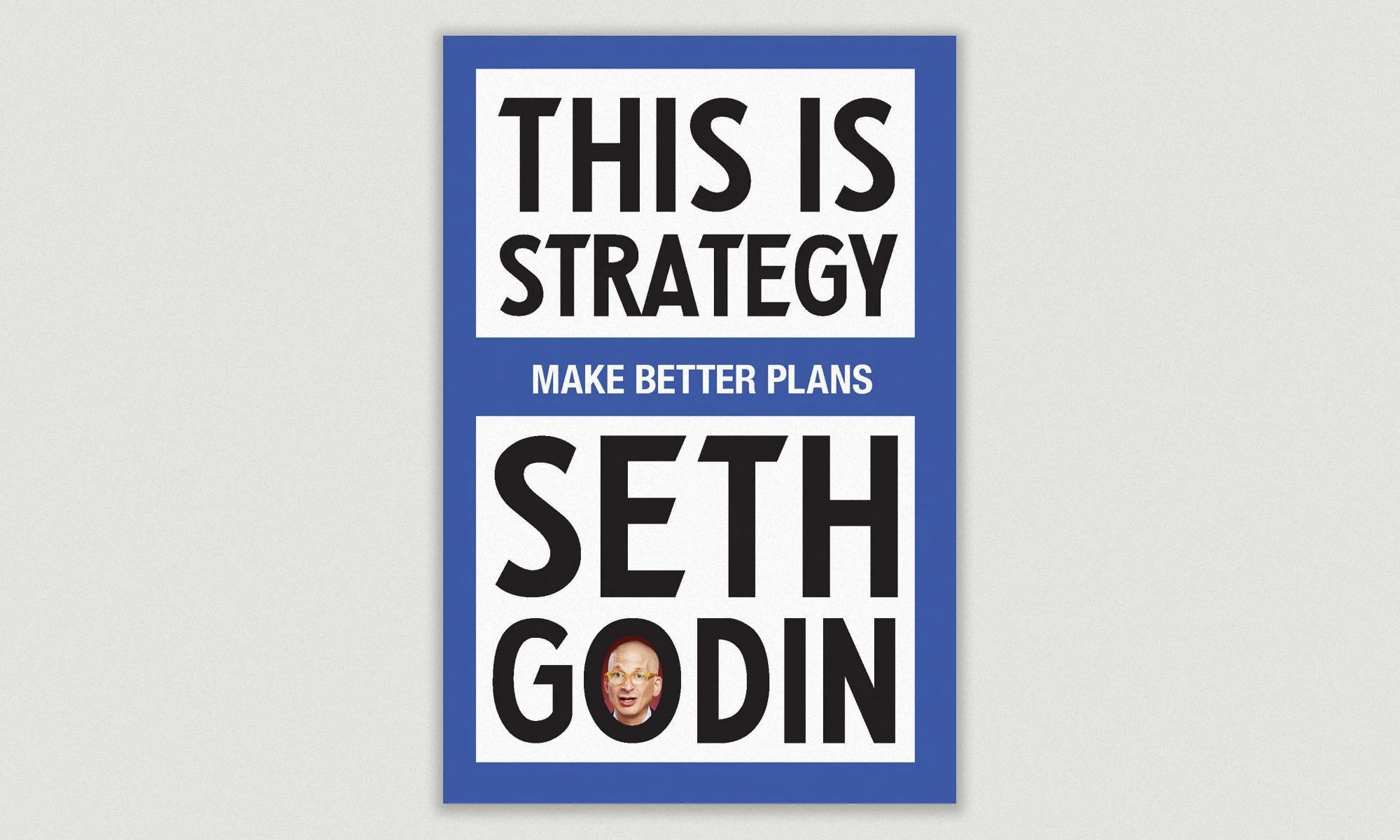
Get the book here
When you think about businesses that have stood the test of time, you start to notice patterns. Maybe it’s an unrelenting care for product quality, the customer experience, or the company’s values. In all cases, there is something or a mix of things that make that business stand out and earn your trust. Those things are the result of strategic choices, made consistently over time.
Strategy is the set of choices a business makes to stand out and thrive in the long term. It involves systems and games.
Systems are the underlying external and internal mechanisms that compose your business. This includes people, teams, leadership principles, culture (how you do things), external players, market dynamics, and many more elements. All these systems are interdependent to varying degrees and form the complex environment where you play. The longer a system has been standing, the deeper its influence and power, and the more difficult it is to change it. Bureaucratic red tape is a system; the way the media and entertainment industry works is a system; the set of mindsets and behaviors within your family or team are part of a system.
Within those systems, there are games constantly being played. Games include dominance vs. affiliation dynamics, zero-sum vs. cooperation, and choosing which game to play at all. Business is an iterative game because it constantly requires shifting moves and adapting to the slight or significant changes of rules (the environment). Playing the game productively means choosing customers, positioning, and creating the conditions for change to occur.
If you serve people, psychosocial components are one of the most important aspects you must consider. We seek status, affiliation, safety as primary biological desires. Your products must fulfill at least one of those desires to be successful and adopted by people. iPhone users gain status and affiliation by owning the product. The same is valid for introducing systemic change. A system exists because it provides important human needs to the people involved. You can’t replace a system without keeping or enhancing the meeting of those needs.
Doing strategy requires constant attention and adaptation to the environment—both internal and external—that’s always shifting due to many factors (some within your control, others not). So, strategy is a long-term, infinite game. It is iterative by nature and it never ends. To effectively do strategy is to practice being at ease with the unknown, because you can’t know in advance whether your strategic choices will turn out effective at keeping your business healthy and in the game.
Strategy does not equal tactics. Tactics can be a subset of the strategy - short-term experiments that help achieve the strategy and that you can clearly measure and evaluate. Tactics are pragmatic and tangible, much less unknown than strategy. That’s why it is considered easier and most common to work on tactics than strategy. Yet, it’s the strategic choices that make a long-term difference. Running a Facebook ad campaign is a tactic; deciding that your brand will only serve a niche audience of 500 people and not chase mass appeal is a strategy.
Strategy involves all functions of your business. It’s an all-encompassing container that feeds and is fed by all the components within and without your business. Strategy isn’t just for leadership; it shapes how your support team responds, how your product team prioritizes, how your marketing speaks.
To do strategy well, you must continue remaining curious, open, receptive, and asking questions that make you reflect and adjust course when needed. If you are overwhelmed by managing daily operations or micromanaging people, it is very difficult to take the time and energy required to analyze the big picture and make strategic choices. You need open space and thoughtful questions.
When asked with precision and answered with sincerity, questions can place you in the most effective place to define your strategy. That’s why having a strategic thinking partner can definitely help, even if it’s a LLM (e.g., Claude, ChatGPT) that you train to ask thoughtful questions to help you hone strategy. Questions such as (just a few of them below, many more are in the book):
Who is this project for? Who is my smallest viable audience?
What systems would need to change for my project to succeed? How can I create the conditions for that change?
Where will I cause tension? What resistance should I anticipate from others (and myself)?
How does my project tap into existing social desires for status, affiliation, and/or security to help propel its adoption and spread?
Am I building the scaffolding people will need to adopt and move forward?
How can I avoid becoming trapped by sunk costs if my initial strategy proves ill-fated? When should I pivot vs. persist? Where's the dip?
How will I resist the social gravity and "pull to the center" over time as my project matures and faces pressure to conform?
You reflect on these questions iteratively—often enough to catch necessary transition points, but not so often that you never commit to a plan long enough for it to work. This is an ongoing practice, an unfinished project, a work in progress - and it is an enjoyable process.